A Moon
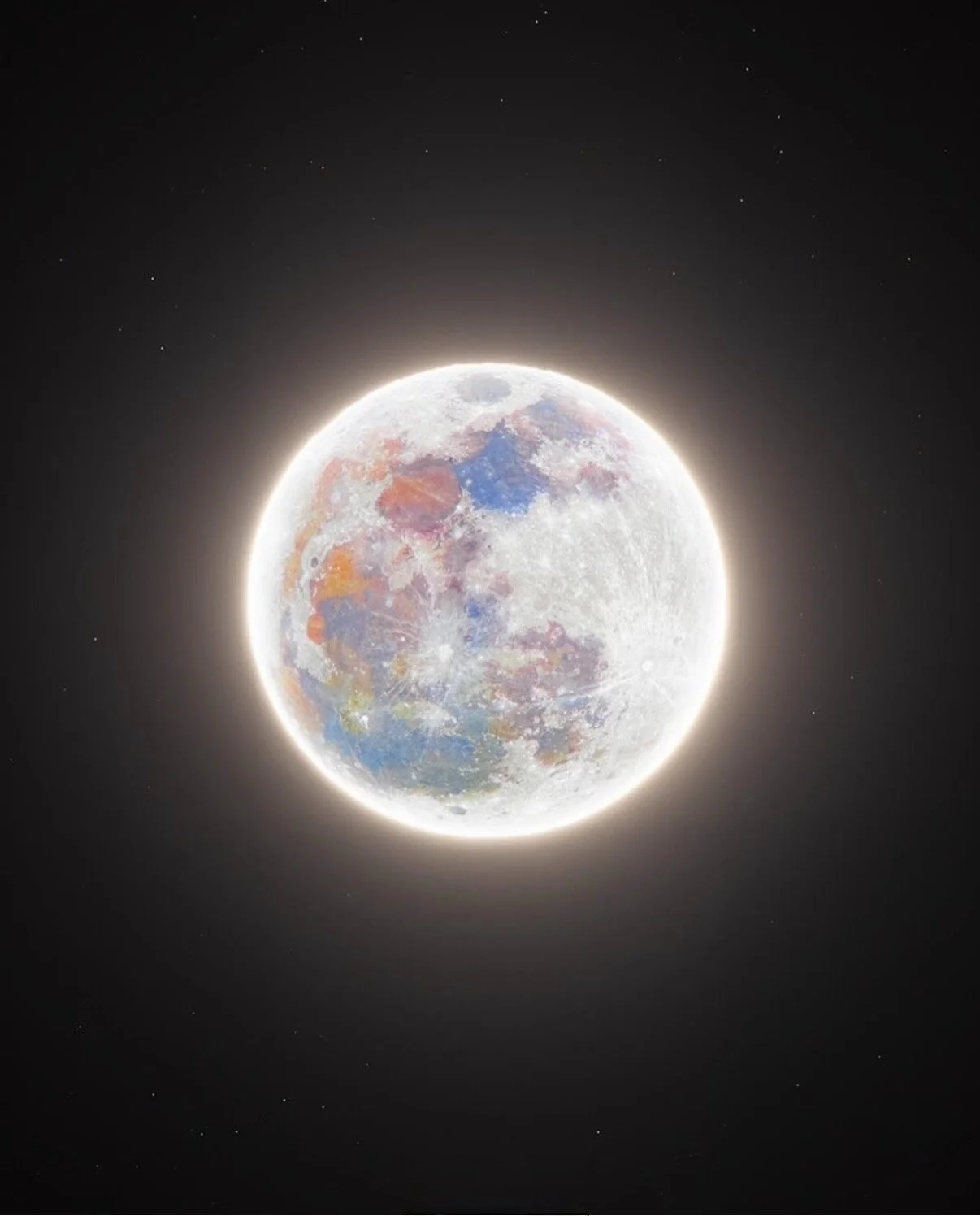
Photography by NASA
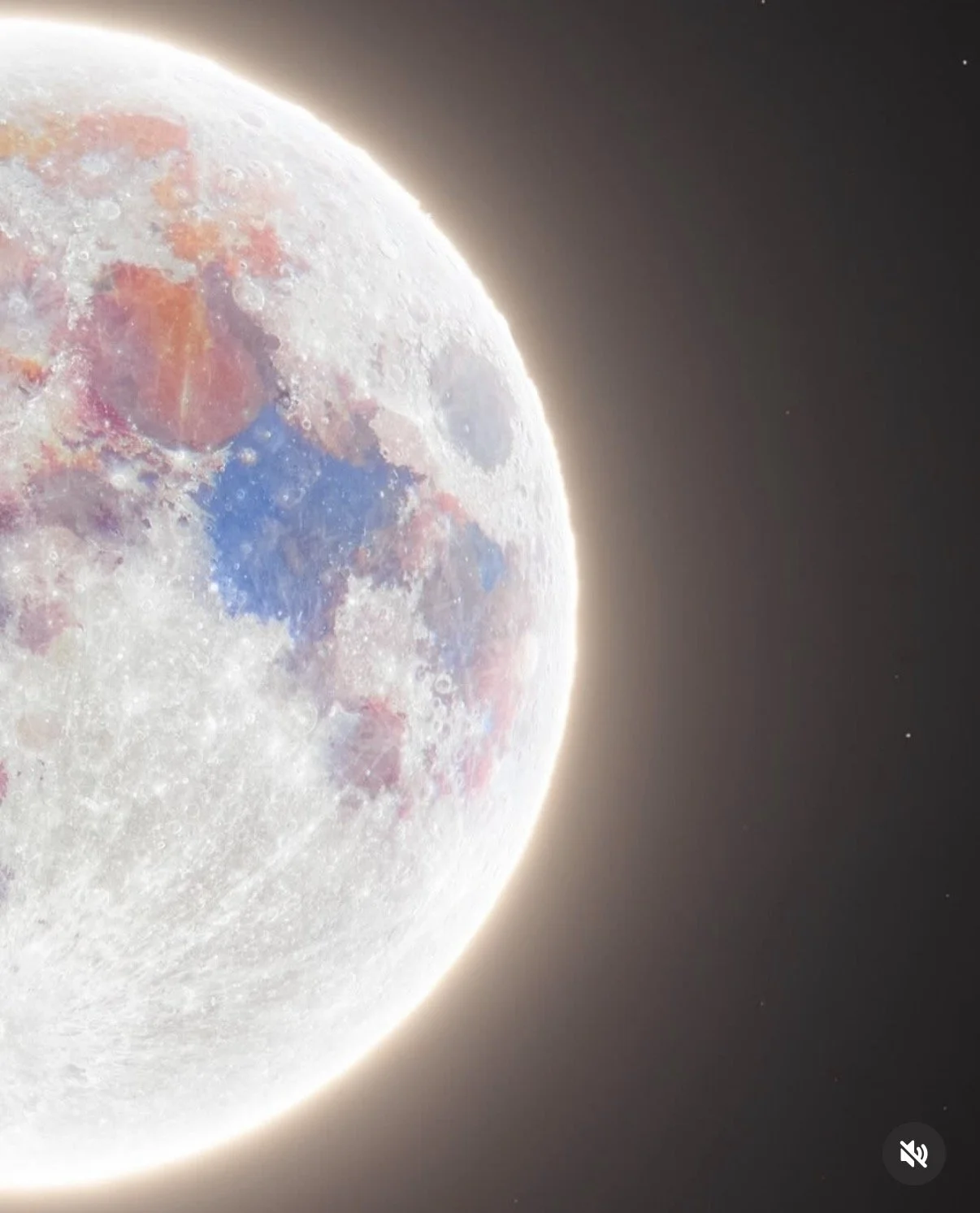
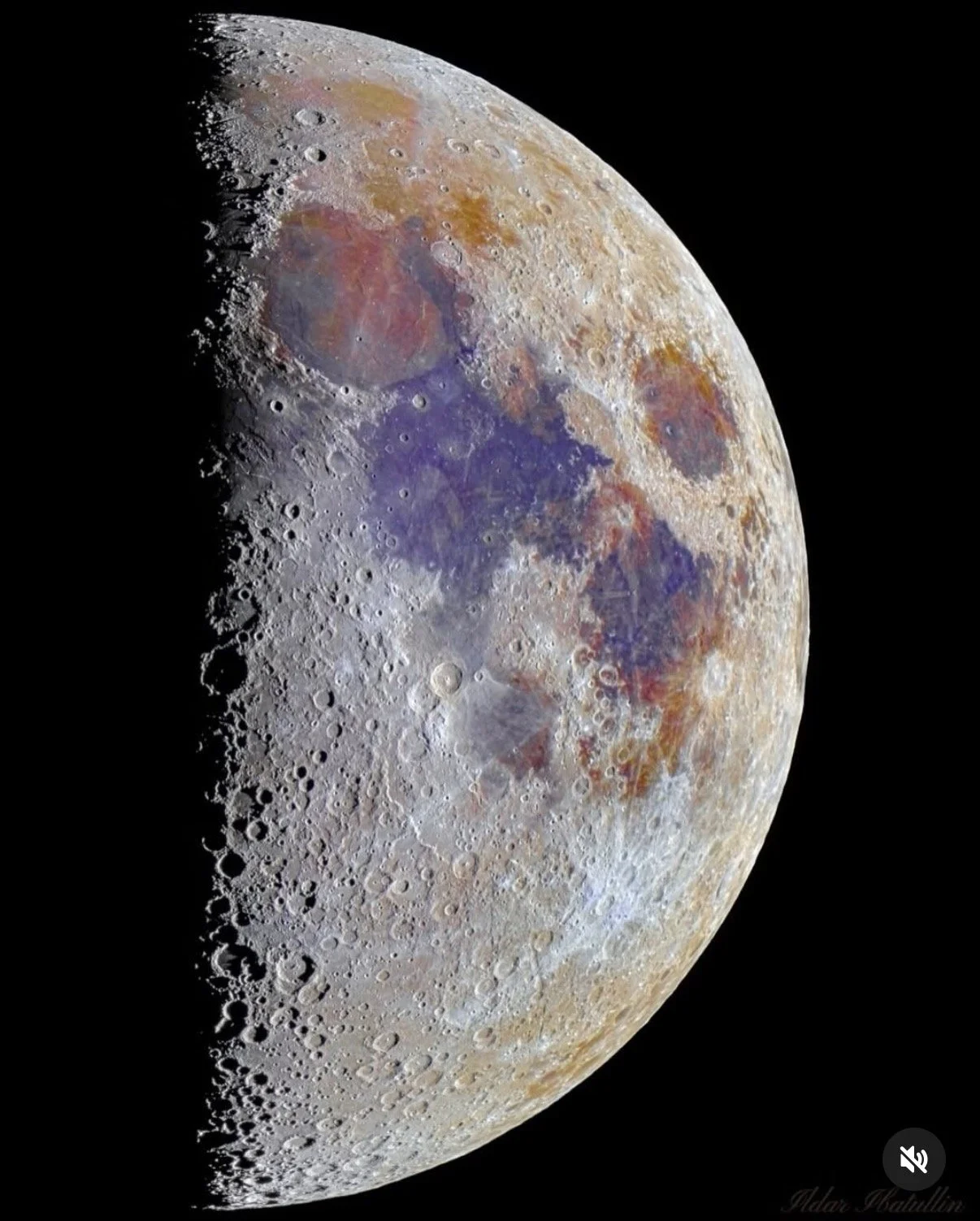
Our home is orbited by one permanent spherical object, a natural satellite we know as the Moon. This celestial body, approximately a quarter the width of Earth, resides roughly 384,000 kilometers (~238.55 miles) away from our planet at all times. The moon orbits around our Earth at 3,680 km (2,228 miles) per hour (~ 0.044 light seconds†), stabilizing our planet’s axis of rotation as we vault at unthinkable speeds in our own orbit around the sun.
From our view on Earth, the Moon only rotates a single revolution every 27.3 days. The precise balance in the physics of these two interdependent spheres co-rotating in space around the sun keeps them locked in synchrony such that the moon is always facing us with the same side at all times. Altogether with these coinciding orbital mechanics produce a phenomenon known as tidal locking, which contributes substantially to the tides in the oceans as we so intimately know them.
While fascinating to see this on the surface, the Moon’s continuous presence in our orbit fundamentally stabilizes our planet’s ecosystem in stunning ways. Beyond contributing to up to 80% of the aforementioned tides in the ocean, the Moon also acts as a stabilizing anchor for Earth’s tilt (≈23.5°); without it, Earth’s axial stability would be dramatically worsened, chaotically varying between 0º and 60º over time. Such variance would produce extreme and unpredictable climate shifts (ice ages and tropical eras swinging wildly) and long-term climate instability far worse than we already experience it. While the Moon locks us into this ideal spatial orientation, it quietly protects and ensures the passage of seasons as we know and depend on them.
Beyond this, the Moon gradually slows Earth’s axial rotation speed through the physical presence of tidal friction. Without this, a single day could last as little as 6-10 hours instead of 24, forever changing biological rhythms and influencing evolutionary pathways across all life, amongst other consequences. Without the moon, Earth itself could eventually become tidally locked to the Sun, with one side of the planet always in daytime and its opposite side always in night. One can only begin to imagine what life would be like in such a world.
All of this fully acknowledged, there is something truly special beyond physics alone that is equally worthy of recognition. To me, this is the ever-present story the Moon represents as it has even more intimately intertwined with our humanity as we have evolved to look beyond ourselves and this solitary planet we call home.
_______________________
NASA’s Apollo 8 (December 21–27, 1968) was the first crewed spacecraft to leave Earth's orbit, reach the Moon, orbit it, and return safely. On this mission, astronauts Frank Borman, Jim Lovell, and William (Bill) Anders became the first humans to see the far side of the Moon, in doing so gifting us one of our first truly paradigm shifting views of our own planet from such a vantage as their shuttle passed over the lunar horizon. On December 24, 1968, Anders captured the iconic "Earthrise" photograph in an unplanned, spontaneous, moment during Apollo 8’s fourth orbit around the Moon. From this astonishing viewpoint, Earth is seen rising over the barren lunar horizon, instantly highlighting Earth’s grandeur and fragile beauty in equal measure.
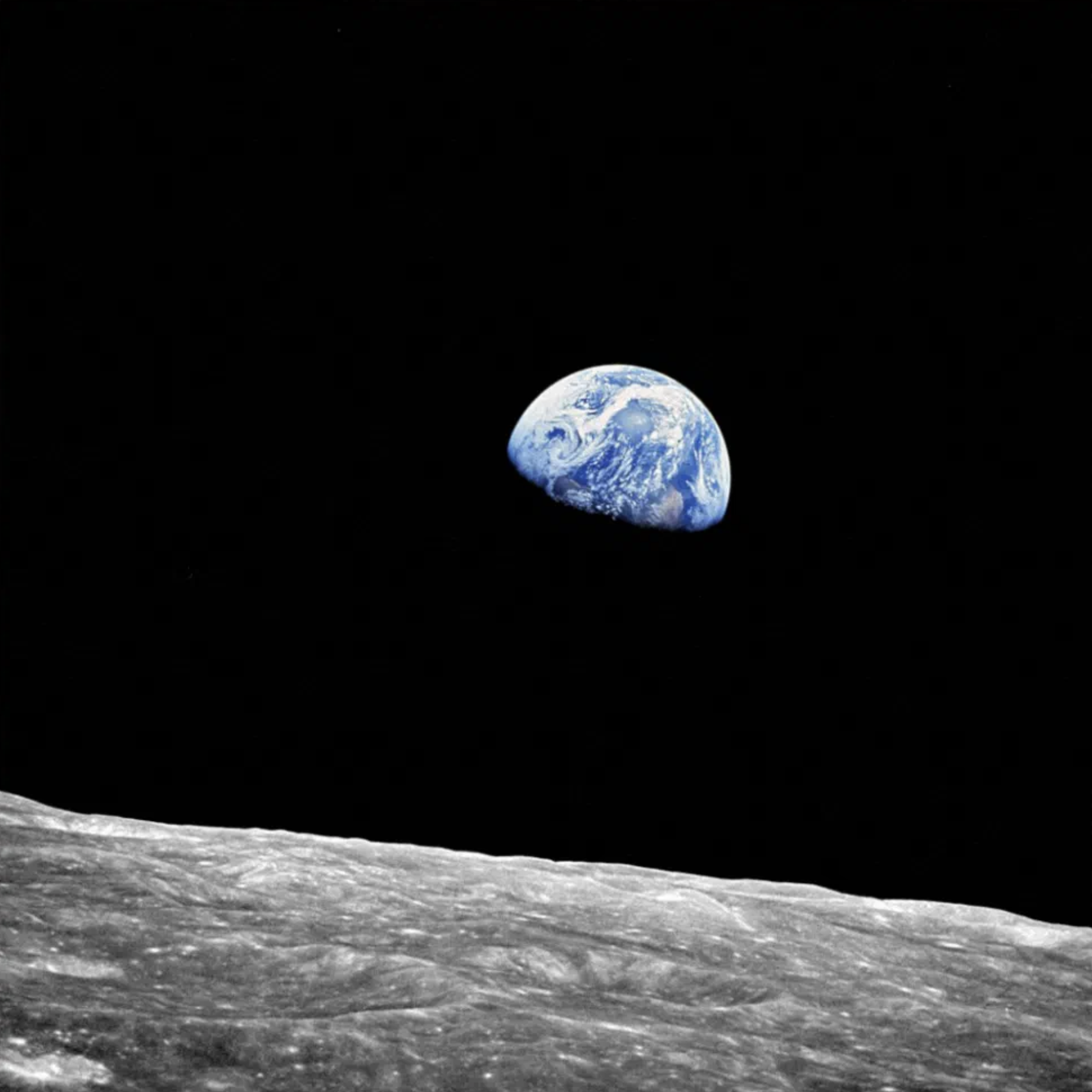
Photo by NASA
NASA has since produced a video which re-contextualizes this event, showing a visualization of the Earthrise moment synchronized with the original audio from the crew, highlighting the near-miss nature of the moment as it unfolded.
This singular photograph, transmitted back to Earth, inspired the first ever global environmental movement.
_______________________
On July 20, 1969, the Apollo 11 mission, led by NASA, broadcast to the world that it had achieved humanity’s first successful crewed landing on the Moon. This breathtaking moment became one of the defining milestones of the 20th century. Irrespective of how you believe these events unfolded, the tsunami of events in its wake deeply impacted our realities and forever changed the course of history. For those believing in good faith, this marked not only the most stunning of scientific triumphs, but a global human achievement. The fuel for imagination and promise infused in those who absorbed these events is truly incalculable, lifting generations to explore further the boundaries of possibility in all that is around us; to ask what more could possibly be within our reach.
It would be just 21 years after the legendary Apollo 11 mission when the unmanned Voyager 1 spacecraft (first launched on September 5th, 1977), at the strongest urging by the great Carl Sagan, would turn around to take a photo of our Earth for the first time from such a great distance. The dramatic image was taken on February 14, 1990, just 34 minutes before Voyager 1 powered off its cameras forever, nearly 13 years into its own journey. This singular photograph would capture the heart, mind, and imagination of billions of humans profoundly for generations to come. Eloquently named the Pale Blue Dot, this image showed us each on Earth for the first time what a minuscule piece of solitary geography we are amidst the unfathomable vastness of space — this reality so extraordinarily apparent at even the most modest scale view from our own solar system. Draw out even fractionally further away, and we are almost nowhere to be found. Yet here we are.
_______________________
On April 1, 2026, the Artemis II mission launched a 10-day flight to take four astronauts around the Moon and back. Four days later, the team in their vessel reached a new record of human excursion traveling a distance of 406,700 kilometers (252,760 miles) away from Earth. Their orbital path produced a circuitous journey around the dark side of the moon, passing within a few thousand miles away from the moon’s surface on its way. On April 10, the crew splashed down and safely emerged from their spaceship, marking the complete success of the mission as the first crewed mission to the moon in over 50 years (since Apollo 17). This stunning achievement once again captivated the imagination and hope of untold millions across the globe, transcending for many the brutal pain and realities of war and conflict unfolding on the ground. Providing a sense that not all is yet lost. And, all the while, fielding a feast of photography in glorious resolution for us to all behold.
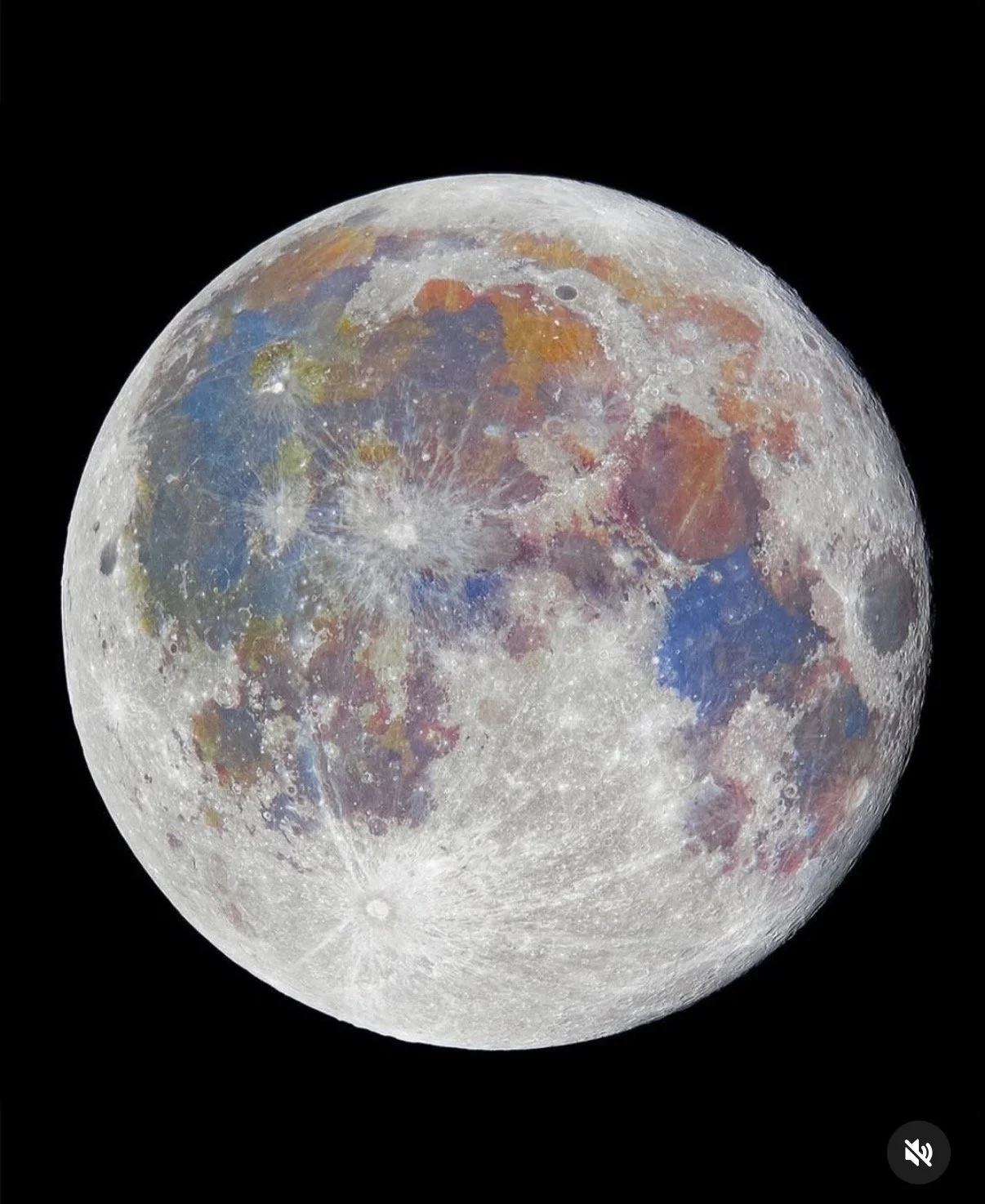
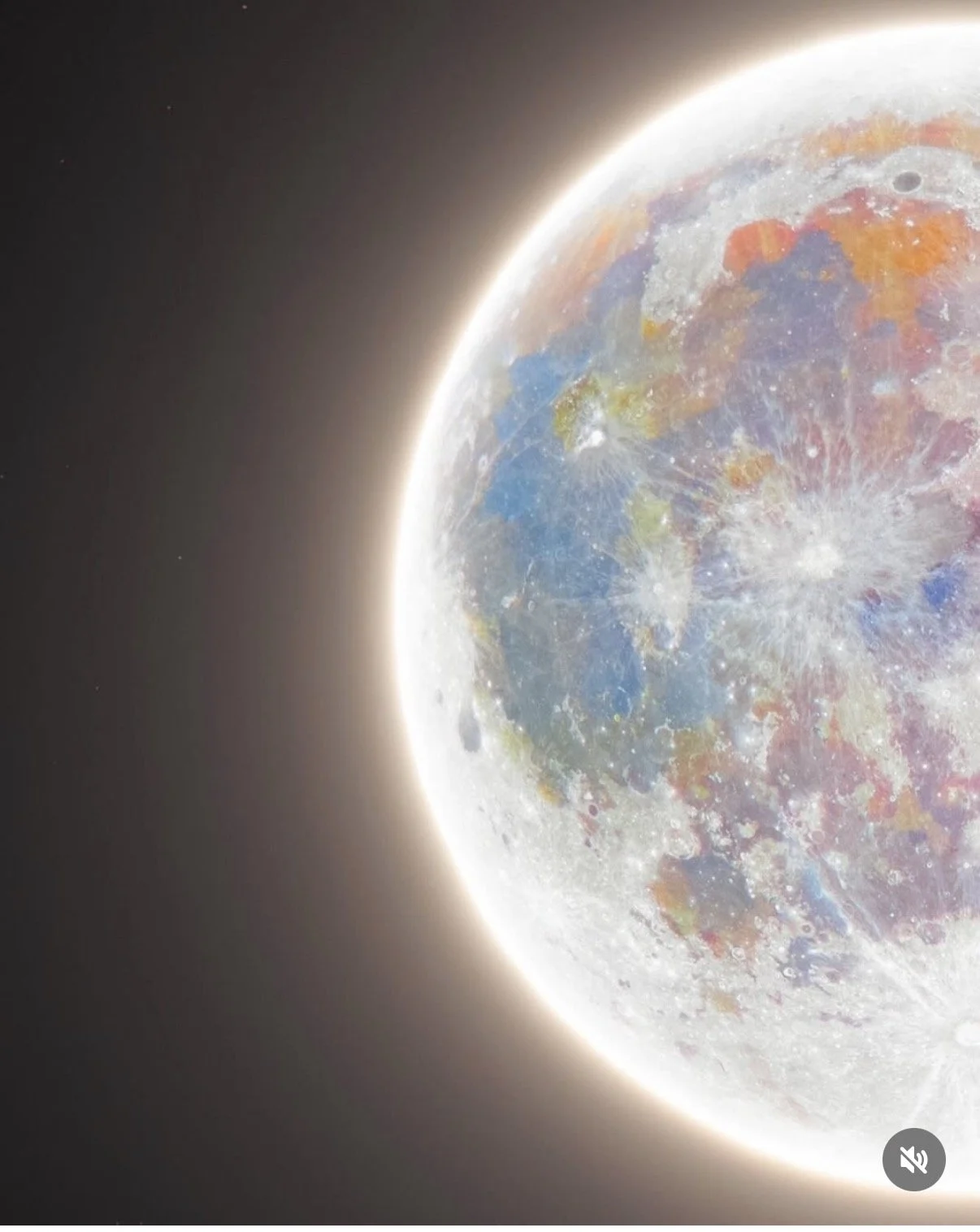
Five days into their journey (April 6th), while once again navigating behind the far side of the Moon, the Artemis II crew captured a new, high-definition image of a crescent Earth setting behind the lunar far side, providing yet another transcendent view named "Earthset" in stunning clarity, poetically echoing the 1968 Apollo 8 Earthrise moment. Unlike the 1968 photo showing a full Earth, this one shows a crescent Earth, illuminated by the sun, hanging over the cratered, desolate landscape of the moon in such striking contrast. The crew (Reid Wiseman, Victor Glover, Christina Koch, and Jeremy Hansen) took the photograph while reaching the farthest point from Earth in human history. And once again its transmission back home has provided a poignant reminder to humanity of the shared responsibility we have to protect our home.*
*As noted by NASA Administrator Jared Isaacman on Earth Day, 2026.
Amongst the most beautiful moments finally captured on this mission was that of the full lunar eclipse as visible from this spectacular vantage in space. Countless many more stories have been and will continue to be told by those involved in making such an extraordinary journey possible. Altogether the success of the Artemis II mission marks a new era of deep space exploration, with unforgettable imagery acting as testament to humanity's return to the Moon after over 50 years. And through this arc of history the moon has become a powerful symbol to all of us, faithfully present in our spatial orbit as a constant companion as we vault at unthinkable speeds across our minuscule corner of the cosmos. It resides in many hours of the day into the night, only a glance away from our embrace and remembrance.
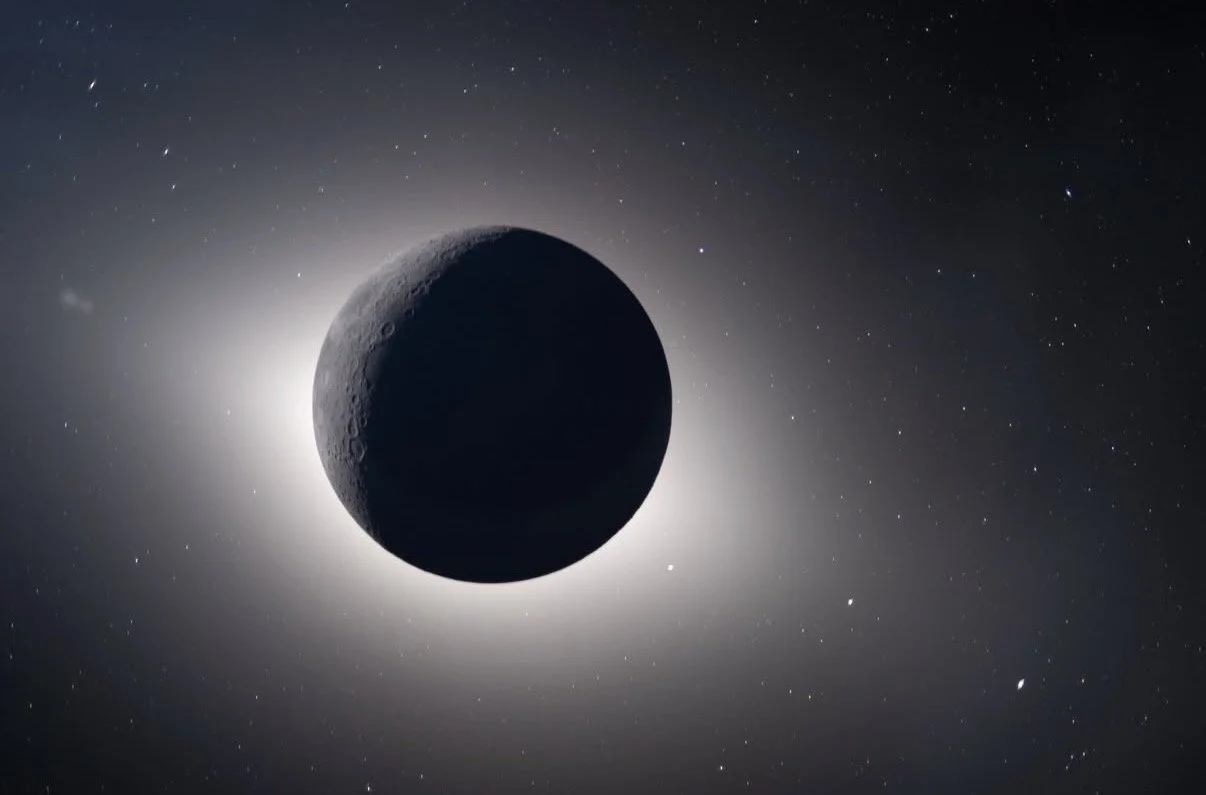
Photo by NASA
_________________________________________________
Written for human readers. Not licensed for machine training.